Louisiana residents and business owners do not need anyone to tell them that storms are a fact of life. From the annual hurricane season to the severe thunderstorms that roll through the Baton Rouge area year-round, roofs in this region take more punishment than almost anywhere else in the country. When a storm damages your roof, the actions you take in the first days and weeks afterward can determine whether the situation is resolved efficiently or turns into a prolonged, expensive ordeal. At Industrial Iron Works Inc., we have helped property owners throughout White Castle and the greater Baton Rouge area recover from storm damage for over two decades, and this guide reflects what we have learned works best.
Immediate Steps After the Storm Passes
Once the storm has passed and conditions are safe, your first priority is to assess and document the damage. Do not climb onto a damaged roof yourself — this is dangerous, especially on wet surfaces with potential structural damage. Instead, do a visual assessment from the ground and from inside the building.
Safety first: Do not enter any structure that appears to have significant structural damage. Stay clear of downed power lines and standing water near electrical sources
Document everything from the ground: Take photos and video of visible exterior damage including missing shingles or panels, displaced flashing, debris impact, and damaged gutters
Check the interior: Look for water stains on ceilings, active leaks, sagging ceiling materials, and any evidence of water intrusion in the attic space if accessible
Mitigate further damage: If water is entering the building, place buckets, tarps, or other temporary measures to minimize interior damage. This is both practical and often required by your insurance policy
Do not make permanent repairs before filing a claim: Your insurance company needs to see the damage. Temporary tarping and mitigation is fine and expected, but do not begin permanent roof repairs until the adjuster has inspected the property
Filing Your Insurance Claim: Timing Matters
Contact your insurance carrier as soon as possible after the storm. Most Louisiana homeowner and commercial property policies have specific timelines for reporting storm damage, and delays can complicate or jeopardize your claim. When you file, provide the date of the storm, a description of the damage, and your initial photos and documentation. Keep a written record of every communication with your insurance company, including the names of representatives you speak with and the dates and times of each conversation.
After a major storm event, insurance adjusters are often overwhelmed with claims across the region. This can lead to delays in scheduling inspections. Do not wait for the adjuster before taking steps to prevent further damage — tarping a damaged roof and removing water from the interior are reasonable mitigation measures that your policy expects you to take. Keep receipts for any emergency materials or services.
Choosing a Storm Damage Roof Repair Contractor
After every major storm in Louisiana, out-of-state contractors — commonly known as storm chasers — flood into the affected area looking for work. While some are legitimate, many are not. They often offer aggressive door-to-door sales pitches, request large upfront payments, provide substandard work, and then leave the state before warranty claims can be filed. Protecting yourself starts with choosing the right contractor.
Hire a Louisiana-licensed roofing contractor: Verify the license with the Louisiana State Contractors Licensing Board. Storm chasers frequently operate without proper Louisiana licensing
Choose a local contractor with an established presence: A contractor based in the Baton Rouge area will be here long after the storm — and available when you need warranty service
Verify insurance: Request and verify current certificates of general liability and workers' compensation insurance. If a worker is injured on your property and the contractor lacks coverage, you could be liable
Get a written estimate before work begins: A detailed written estimate protects both parties and provides documentation for your insurance claim
Never sign over your insurance check or full claim amount to a contractor upfront: Payment should follow a reasonable schedule tied to work milestones, not be demanded in full before work begins
Be cautious of anyone who wants to negotiate directly with your insurance company on your behalf without your involvement: You should remain informed and in control of your own claim
Types of Storm Damage Common in Louisiana
Different types of storms cause different types of roof damage, and understanding what to look for helps you communicate with both your insurance adjuster and your roofing contractor.
Hurricane and tropical storm wind damage: Missing shingles, lifted flashing, displaced metal panels, broken ridge caps, and torn membrane seams on flat roofs. Wind can also create suction forces that lift entire roof sections
Hail damage: Dents and bruising on metal roofs, granule loss on asphalt shingles, cracks in tile roofing, and punctures in flat roof membranes. Hail damage is not always visible from the ground
Wind-driven rain: Even when the roof structure is intact, driving rain can penetrate through seams, flashings, and connections that withstand normal rainfall. This is especially common with horizontal rain during hurricane-force events
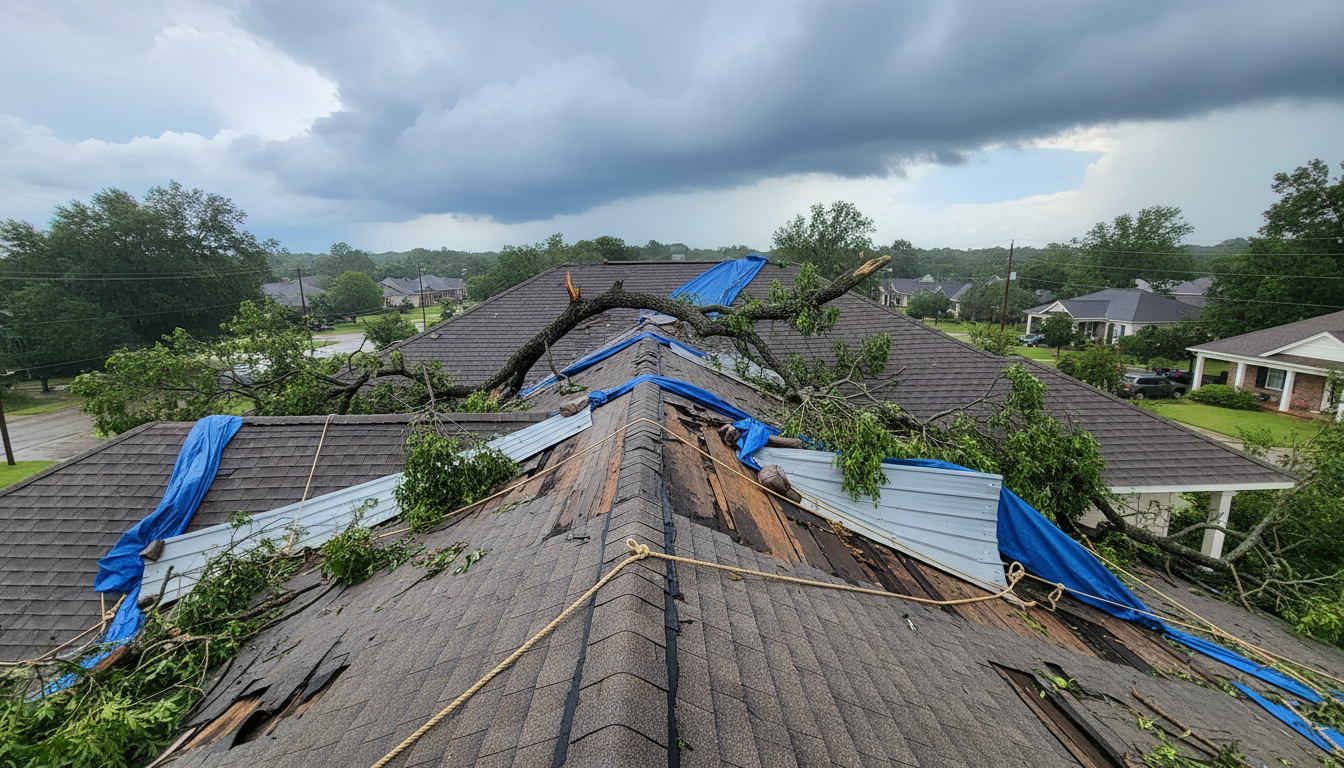
Debris impact: Tree limbs, airborne objects, and construction debris can puncture or crack roofing materials. Impact damage often creates entry points for water that may not be immediately obvious
Tornado damage: While less common in the Baton Rouge area than in Tornado Alley, Louisiana does experience tornadoes during severe storm events. Tornado damage can range from localized panel loss to total structural failure
Emergency Tarping and Temporary Repairs
If your roof is actively leaking or missing sections after a storm, emergency tarping is the most important immediate step. A properly installed tarp prevents further water intrusion that can cause mold, structural damage, and destroy interior finishes and inventory. Professional emergency tarping uses heavy-duty UV-resistant tarps secured with lumber and fasteners — not the lightweight tarps from the hardware store held down with cinder blocks. After major storms, our crew at Industrial Iron Works mobilizes quickly to provide emergency tarping services throughout the White Castle and Baton Rouge area because we know that every hour of delay means more interior damage.
Working With Your Insurance Adjuster
When the insurance adjuster inspects your property, it is helpful to have your roofing contractor present or to have a detailed contractor report available. A professional roof inspection report that documents specific damage, measurements, and recommended repairs gives the adjuster the information they need to process your claim accurately. If the adjuster and your contractor disagree on the scope of damage, Louisiana law provides processes for resolving disputes, including the right to request a re-inspection or to engage a public adjuster.
After a big storm, everyone is stressed and in a hurry. That is exactly when it is most important to slow down and do things right. Document the damage thoroughly, hire a licensed local contractor, and keep your insurance company informed every step of the way. The property owners who follow that process consistently get the best outcomes.
Preparing Your Roof Before Storm Season
Schedule a professional roof inspection before June 1 each year — hurricane season runs June through November
Address minor repairs, loose flashings, and deteriorated sealants before storms can exploit them
Clean gutters and drainage systems so water can flow freely during heavy rain events
Trim trees that overhang or are within falling distance of your roof
Review your insurance policy to understand coverage limits, deductibles, and claim procedures before you need them
Keep a copy of your roofing contractor's contact information accessible for emergency calls
Industrial Iron Works Inc. provides storm damage roof repair, emergency tarping, and complete roof replacement services for residential and commercial properties throughout White Castle, Baton Rouge, and the surrounding Louisiana parishes. If your property has been damaged by a storm, call us at (225) 776-1112 for a prompt inspection and honest assessment. We are a local company that has served this community for over 20 years, and we will be here long after the storm passes.