One of the most underestimated phases of any construction project is what happens before the first wall goes up. Site preparation for construction is the foundation — literally and figuratively — of every successful build. In Louisiana, where the soil, climate, and drainage conditions present unique challenges, proper site prep is not optional. Skipping or rushing through it leads to cracked foundations, drainage failures, and costly repairs that far exceed what the preparation would have cost.
What Site Preparation Actually Involves
Site preparation is a broad term that covers several distinct phases. Depending on the condition of your land, your project may require some or all of the following steps. A qualified contractor offering site preparation services will assess your specific property and recommend the right sequence and scope.
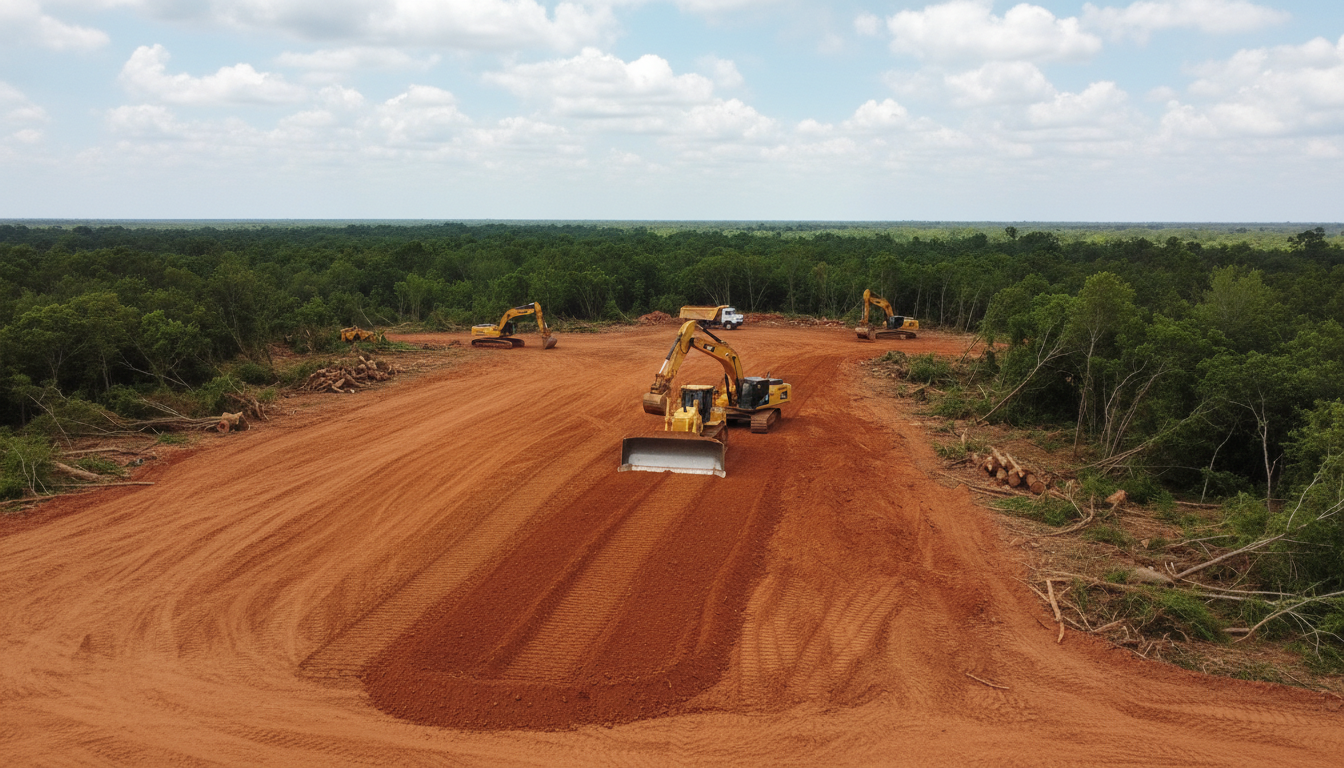
Land clearing: removal of trees, brush, stumps, and vegetation
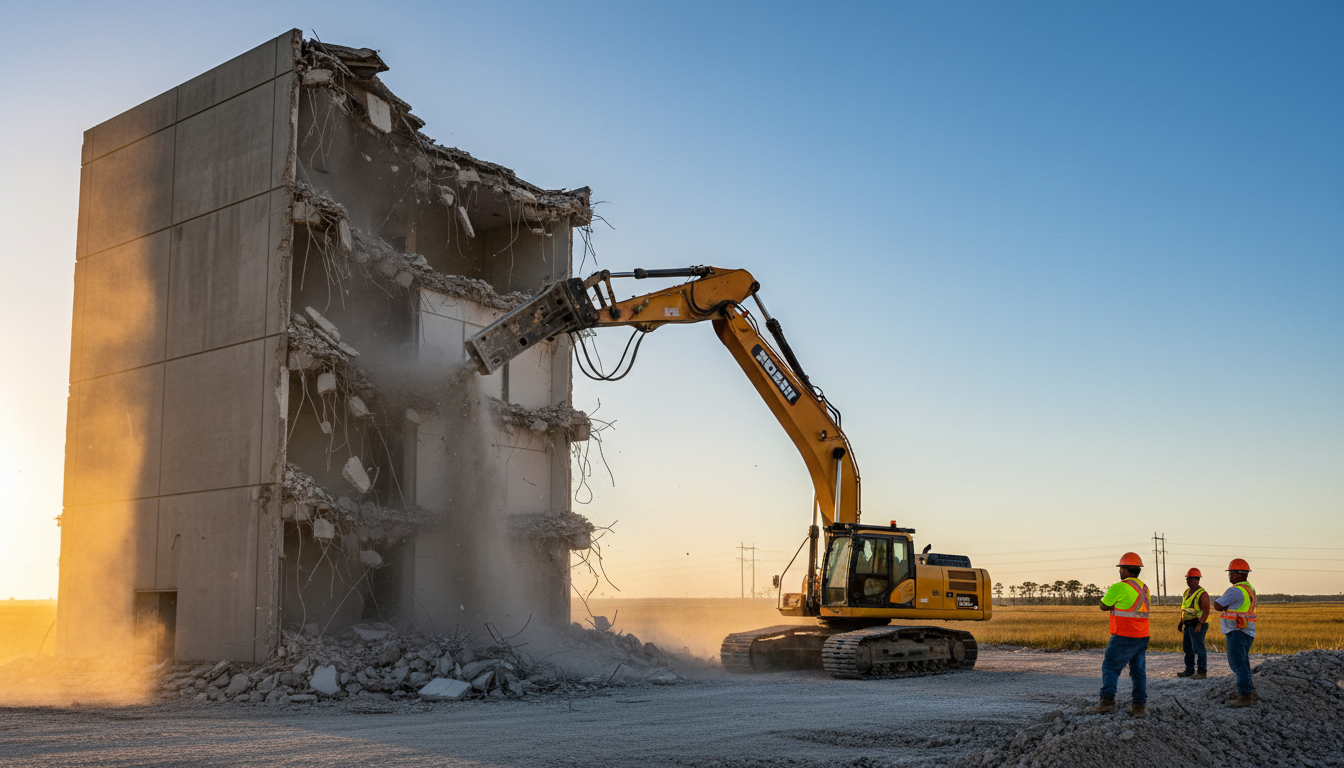
Demolition services: tearing down existing structures that are being replaced
Grading: reshaping the land surface to achieve proper slope and drainage
Excavation: digging for foundations, utilities, and below-grade structures
Soil testing: analyzing the composition and load-bearing capacity of the ground
Compaction: mechanically densifying the soil to support structural loads
Erosion control: installing barriers and measures to prevent soil loss during construction
Louisiana Soil: Why It Creates Unique Challenges
Across the Baton Rouge area and the River Parishes, including communities like White Castle, the soil composition presents challenges that contractors in other states simply do not face at the same scale. Much of south Louisiana sits on highly expansive clay soils. These soils swell when wet and shrink when dry, creating ground movement that can shift and crack foundations if they are not properly designed and prepared for.
In addition to clay, portions of the region have soft, compressible organic soils that compress under structural loads over time. This is why soil testing is not just a formality in Louisiana — it directly determines what type of foundation work is appropriate for your site. A geotechnical soil report will identify bearing capacity, moisture content, and any subsurface conditions that need to be addressed before construction begins.
Drainage and Flooding Considerations
Louisiana receives some of the highest annual rainfall in the contiguous United States, and the low-lying topography across much of the Baton Rouge metro and Iberville Parish means drainage cannot be an afterthought. Proper grading during site preparation directs stormwater away from your structure and toward drainage channels or retention areas. Without it, water pools around foundations, saturates the soil, and creates ongoing structural and moisture problems.
On larger commercial sites, a drainage plan may need to be engineered and approved as part of the permitting process. For residential properties in flood-prone areas, elevation requirements may also come into play, affecting how the site is graded and where the finished floor level needs to be set relative to base flood elevation. Your site preparation services provider should be familiar with these local requirements.
Clearing and Demolition: Starting With a Clean Slate
If your property has existing structures, vegetation, or debris that must be removed before construction, demolition services are typically the first step. Removing old slabs, underground utilities, and tree root systems requires specialized equipment and experience. Improper clearing can leave buried organics that decompose under a new structure, causing settling. It can also disturb existing utility lines if the demolition team has not coordinated with the relevant utility providers ahead of time.
Foundation Work: Where Site Prep and Building Connect
The relationship between site preparation and foundation work is direct. The type of foundation recommended for your project — slab-on-grade, pier and beam, deep pilings — depends largely on what the soil testing reveals. In areas with poor bearing capacity or high moisture, a slab that would be perfectly adequate elsewhere may fail within a few years. Getting the site prep right means the foundation work that follows is built on solid ground, not assumptions.
How Long Does Site Preparation Take?
Timeline varies significantly based on the size of the site, what needs to be cleared or demolished, and weather conditions. A straightforward residential lot clearing and grading in the Baton Rouge area might take a few days. A larger commercial site with demolition of existing structures, extensive grading, soil stabilization, and utility rough-in can take several weeks. Louisiana weather — particularly during storm season — is a real factor, and any realistic site prep timeline should include buffer time for weather delays.
What Does Site Preparation Cost in Louisiana?
Site preparation costs depend heavily on the existing conditions of the land, the size of the project, and the scope of work required. Basic clearing and grading for a residential lot is typically more affordable than a commercial site that requires demolition, extensive excavation, soil remediation, and engineered drainage systems. Investing appropriately in site preparation is almost always less expensive than correcting foundation failures or drainage problems after the structure is built. Get a detailed, itemized estimate from your contractor so you understand exactly what is included.
We have seen what happens when site preparation is rushed or cut short on Louisiana properties. The soil here demands respect. Proper grading, drainage, and soil testing before any foundation work begins is what separates a project that lasts decades from one that starts causing problems within the first few years.
Industrial Iron Works provides comprehensive site preparation services, demolition services, and foundation work across White Castle, Baton Rouge, and the surrounding parishes. If you are planning a construction project and want to make sure the groundwork is done right from the start, call us at (225) 776-1112. We will walk you through what your specific site needs and give you a clear, honest plan before any work begins.