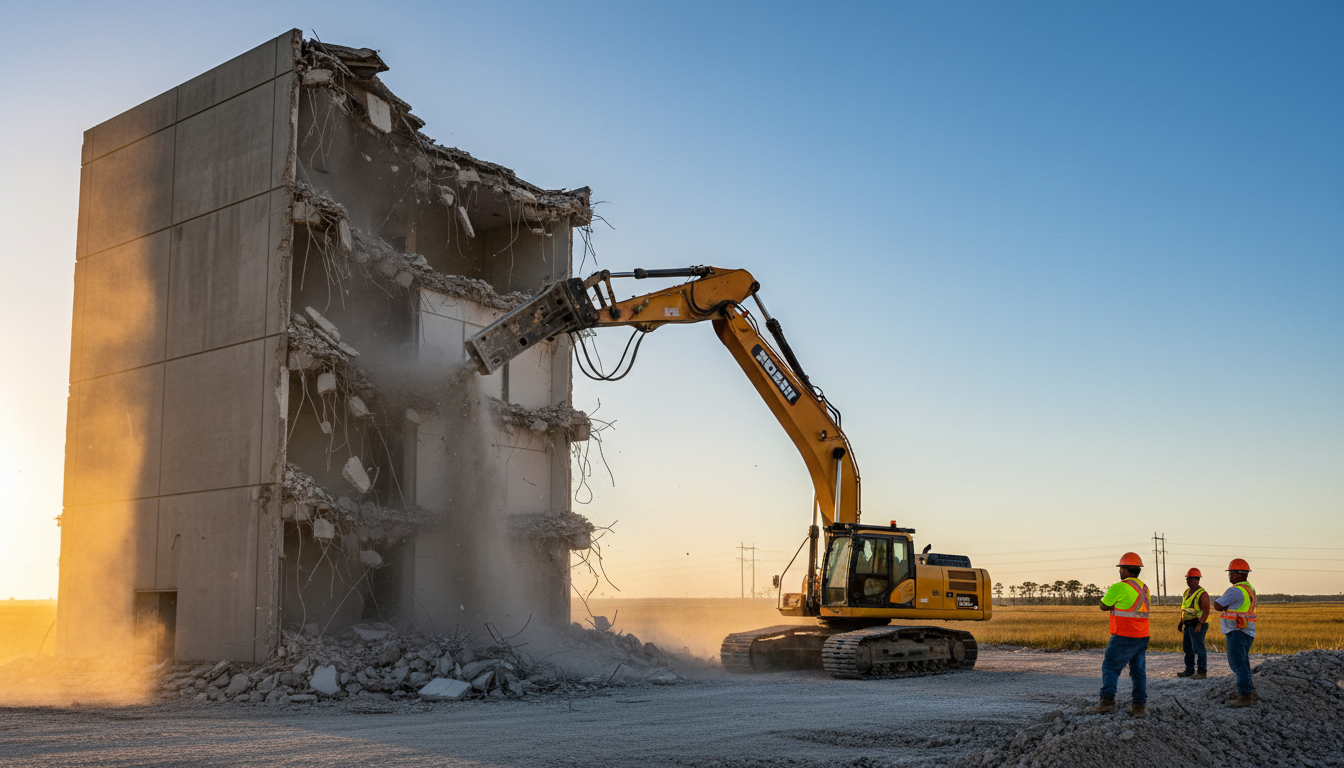
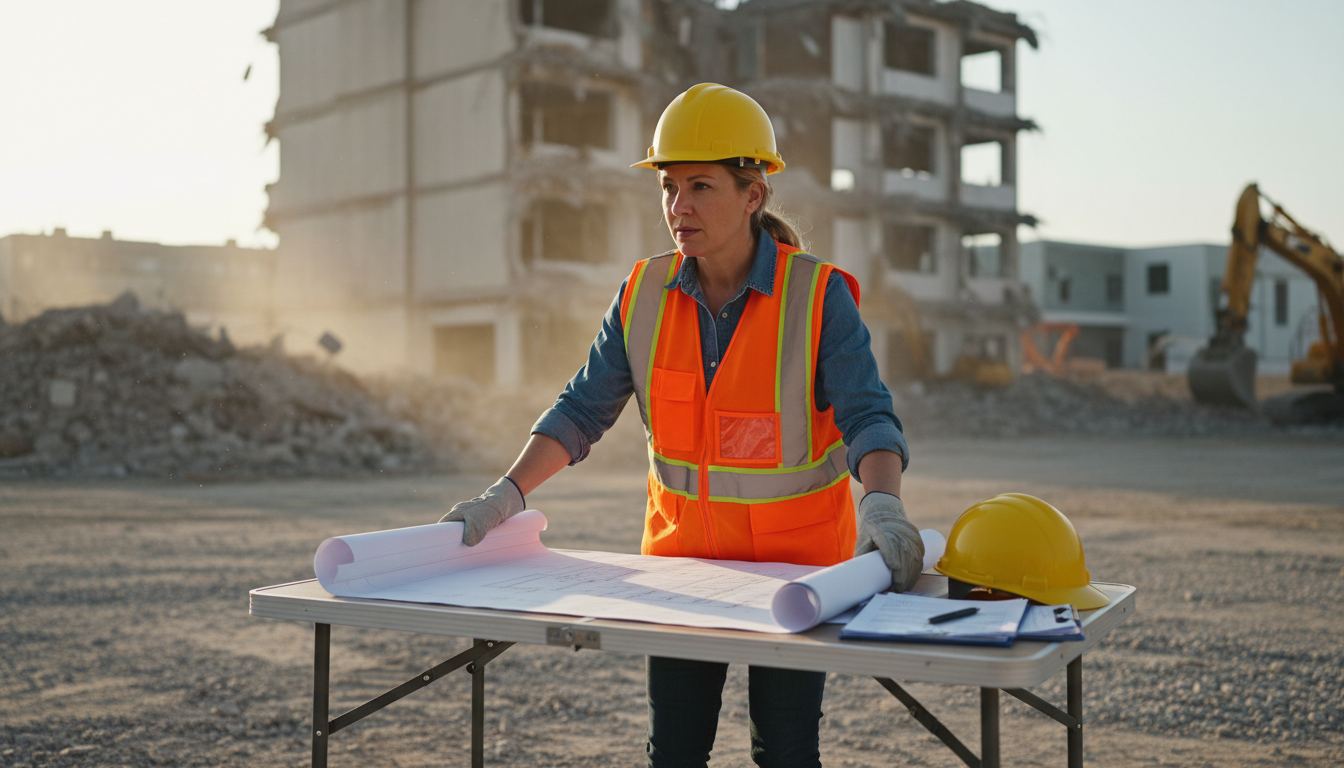
Before any structure comes down in Louisiana, there is paperwork that needs to go up. Demolition permits are required by virtually every parish and municipality in the state, and navigating the permitting process is a critical step that should happen well before equipment arrives on site. At Industrial Iron Works Inc., we handle demolition permitting as part of our standard service for clients throughout the White Castle and Baton Rouge area. But whether you are working with us or managing the process yourself, understanding what is required helps you plan realistic timelines and avoid costly delays.
Why Demolition Permits Are Required
Demolition permits exist to protect public safety, the environment, and neighboring properties. When a structure comes down, there are risks involved — falling debris, dust, hazardous materials, utility disruptions, and impact on adjacent properties. The permitting process ensures that the contractor has a plan to manage these risks, that utilities have been properly disconnected, that any hazardous materials have been identified and addressed, and that the work will comply with local ordinances and environmental regulations.
Performing demolition work without a permit in Louisiana is illegal and carries real consequences. Fines, stop-work orders, and liability for damages to neighboring properties are all possible outcomes. In some cases, unpermitted demolition can also create title issues that complicate future sale or development of the property.
The Permitting Process in the Baton Rouge Area
Permitting requirements vary by jurisdiction across Louisiana. In the Baton Rouge metro and surrounding parishes — including Iberville, Ascension, West Baton Rouge, and East Baton Rouge — the general process follows a similar pattern, though specific forms, fees, and timelines differ. Here is what to expect in most jurisdictions.
Application submission: Complete the demolition permit application with the parish or city permitting office, including property details, scope of work, and contractor information
Proof of contractor licensing: The demolition contractor must hold a valid Louisiana State Contractors License — the permit office will verify this
Utility clearance: Provide documentation that all utilities (gas, electric, water, sewer, telecommunications) have been disconnected or will be disconnected before work begins
Asbestos survey: For commercial structures and many residential buildings built before 1980, a licensed asbestos inspection report is required before a demolition permit is issued
Site plan: Some jurisdictions require a basic site plan showing the location of the structure to be demolished, adjacent properties, and the intended scope of work
Fee payment: Permit fees vary by parish and project scope — expect fees to range from modest amounts for residential demolition to higher fees for large commercial projects
Review and approval: The permitting office reviews the application and supporting documents, which typically takes one to three weeks depending on the jurisdiction and project complexity
Asbestos Regulations: A Critical Step Before Demolition
Louisiana follows federal EPA NESHAP (National Emission Standards for Hazardous Air Pollutants) regulations for asbestos in demolition projects. For all commercial demolition and renovation projects, a thorough asbestos inspection by a licensed inspector is required before a demolition permit can be issued. If asbestos-containing materials are found, licensed abatement must be completed before demolition begins, and proper notification must be filed with the Louisiana Department of Environmental Quality (LDEQ).
For residential properties, the requirements are somewhat different. Single-family homes with four or fewer units are exempt from the NESHAP notification requirement in most cases. However, this does not mean asbestos can simply be ignored. If asbestos is present and disturbed during demolition, it becomes a health hazard and a legal liability. Responsible demolition contractors will still assess the property for asbestos-containing materials regardless of the regulatory exemption.
Utility Disconnection: Coordinating Before the Permit
One of the most common causes of demolition project delays is waiting for utility disconnections. Gas, electric, water, and sewer services all need to be formally disconnected — not just shut off — before demolition can safely proceed. In the Baton Rouge area, this requires coordinating with Entergy for electrical service, Atmos Energy for natural gas, and the local water and sewer authority. Each provider has its own timeline for processing disconnection requests, and some can take two to four weeks or longer. Starting this process early is one of the most important things a property owner can do to keep a demolition project on schedule.
Environmental Considerations and LDEQ Notifications
Beyond asbestos, Louisiana has specific environmental regulations that may apply to demolition projects. If the property has a history of industrial use, underground storage tanks, or known soil contamination, additional environmental assessments may be required before demolition. The Louisiana Department of Environmental Quality (LDEQ) oversees these requirements and may need to be notified depending on the project scope and property history. Demolition debris disposal is also regulated — certain materials must go to licensed facilities, and clean fill, concrete, and metals have specific handling requirements.
How Long Does the Permit Process Take?
For a straightforward residential demolition in an unincorporated area of Iberville Parish, the permit process can sometimes be completed in one to two weeks. For larger commercial projects in East Baton Rouge Parish or the City of Baton Rouge, the process typically takes two to four weeks, particularly if an asbestos survey and abatement are required. Projects involving environmental assessments, historic properties, or properties in flood zones may take longer due to additional review requirements.
We handle the permitting process for our clients as part of the project because we know how to move it along efficiently. Property owners who try to navigate it on their own often lose weeks to avoidable delays. We know which forms each parish needs, which inspectors to coordinate with, and how to get utility disconnections scheduled early enough to keep the project on track.
Common Mistakes That Delay Demolition Permits
Waiting until the last minute to request utility disconnections — start this process at least four weeks before your target demolition date
Skipping the asbestos survey on older buildings — the permit office will not issue the permit without it for commercial structures
Submitting incomplete applications — missing contractor license numbers, insurance certificates, or site plans will bounce the application back
Not checking for local historic designations — properties in historic districts may have additional requirements or restrictions on demolition
Assuming one permit covers everything — in some jurisdictions, separate permits may be needed for demolition, grading, and new construction
Should Your Contractor Handle the Permits?
In most cases, yes. An experienced demolition contractor who works regularly in the Baton Rouge area will know the specific requirements of each parish permitting office, have established relationships with the utility providers, and understand the asbestos and environmental regulations that apply. This saves time and reduces the risk of errors that cause delays. When evaluating demolition contractors, ask specifically whether permit management is included in their services and fee structure.
Industrial Iron Works Inc. manages the full demolition permitting process for our clients throughout White Castle, Baton Rouge, and the surrounding parishes. From utility coordination to asbestos survey management to permit application submission, we handle the administrative work so our clients can focus on planning the next phase of their project. Call us at (225) 776-1112 to discuss your demolition project and let us take care of the permitting details.